Due to a recent change in our pharmacy software system, the process for submitting refill requests online has now changed.
Our previous mobile app and your current login credentials will no longer work.
Please click the Refill Online tab in My Pharmacy to begin the new process.
Thank you for your patience during this transition.
Get Healthy!
- Posted December 16, 2025
Most U.S. Teens Use YouTube and TikTok Daily, Pew Finds
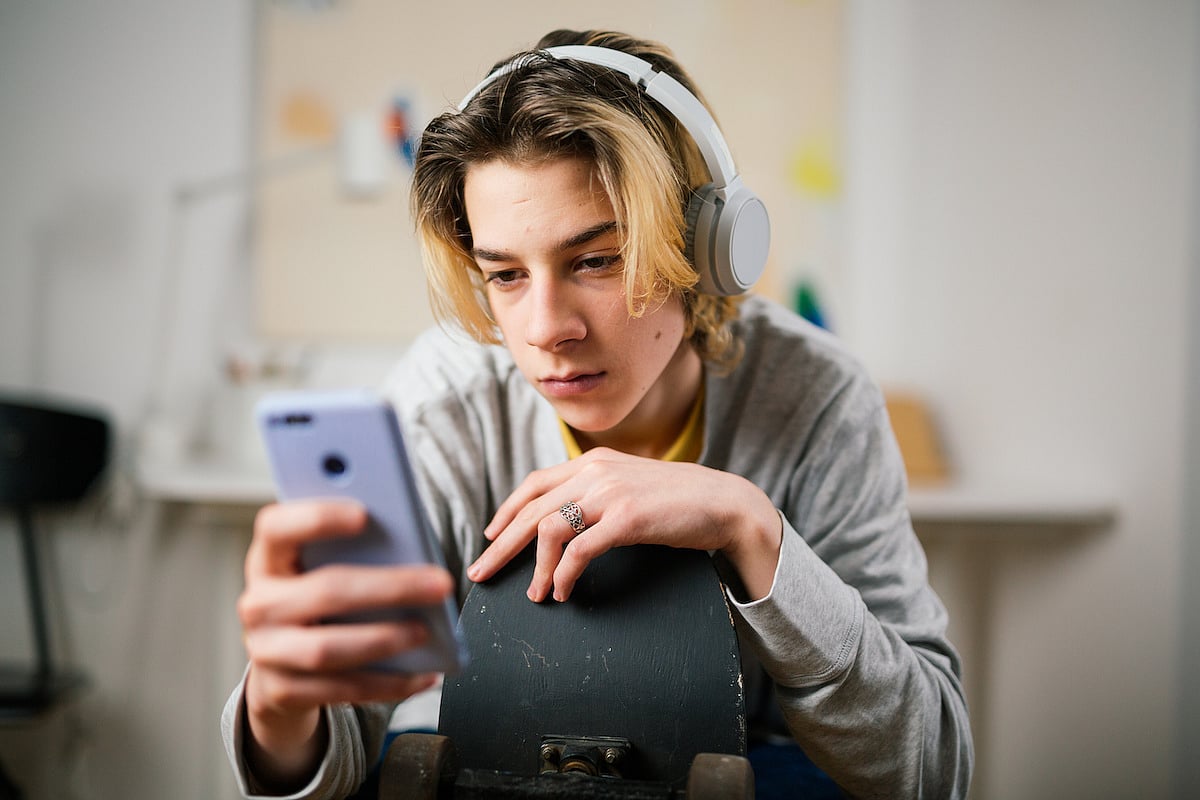
Scrolling is still a big part of daily life for American teenagers, despite mounting worries about screen time and mental health.
A new report from the Pew Research Center found that most teens in the U.S. use YouTube and TikTok every day, and about 1 in 5 say they’re on one of those platforms almost constantly.
The survey of 1,458 teens between 13 and 17 years of age shows that phones, videos and social apps remain deeply ingrained into teen life.
YouTube was the clear favorite, with about 75% of teens saying they use it daily. TikTok, Instagram and Snapchat also ranked high, while Facebook lagged far behind.
“Roughly a third of teens say that they’re on at least one of the five almost constantly -- and that number has stayed steady for several years now,” lead author Michelle Faverio, a Pew research associate, told The New York Times.
The report also showed differences across many groups.
Black and Hispanic teens were more likely than white teens to say they used YouTube, TikTok and Instagram almost all the time. Girls reported heavier use of Snapchat and Instagram, while boys were more likely to use YouTube and Reddit.
Pew also found that teens are increasingly turning to artificial intelligence chatbots. About 64% said they’ve used one, and 28% use them daily. Around 16% said they use chatbots several times a day or almost constantly.
ChatGPT was the most commonly used chatbot, followed by Google’s Gemini and Meta AI. A smaller share said they used character-based chatbots such as Character.ai.
The findings don’t surprise mental health experts, but they do raise some concerns.
“Online life is very much part of kids’ lives,” Eileen Kennedy-Moore, a psychologist in Princeton, N.J., who reviewed the findings, told The New York Times. “It’s not that watching any one YouTube video is going to turn them into a pumpkin, but if they are on it almost constantly, what are they missing?”
Researchers caution that screen time alone doesn’t tell the whole story. Some studies show that longer screen use isn’t always linked to worse mental health. But compulsive or addictive use, experts say, is more concerning.
Kennedy-Moore said constant screen use can disrupt sleep, exercise and in-person friendships, and that chatbots don’t help teens practice real-world social skills.
A recent study in the journal Pediatrics found that kids who had a smartphone by age 12 were more likely to experience depression, obesity and poor sleep.
Lawmakers are also paying more attention. Several U.S. states now limit phone use during school hours, and Australia recently banned social media for kids under 16.
But some experts say parents and caregivers play the biggest role.
“If your child is young enough to have a bedtime, their devices need a bedtime too,” Kennedy-Moore said. “I can tell you as a clinician, nothing good happens on those devices in the middle of the night.”
More information
Yale Medicine has more on how social media affects teen mental health.
SOURCE: The New York Times, Dec. 9, 2025
